Do you need a stucco inspection before buying a home?
Yes, if the home has stucco, and especially if it’s a newer build in the Philadelphia area. A standard home inspection only looks at the surface, so it can’t measure moisture behind stucco. A separate stucco inspection, usually with invasive probe testing, shows whether the sheathing and framing are dry or water-damaged before you commit.
Why stucco inspections are so common around Philadelphia
Southeastern Pennsylvania gets a lot of rain, humid summers and repeated freeze-thaw cycles in winter. When stucco is installed without proper flashing, drainage or sealant joints, water can get behind it and stay there. The wall can look fine from the outside while the wood behind it rots. Local inspectors see this often enough that stucco testing is a routine part of many area home purchases.
Standard home inspection vs. stucco inspection
| Standard home inspection | Stucco inspection | |
|---|---|---|
| What’s checked | Visible condition of the exterior | Moisture levels inside the wall assembly |
| Tools | Eyes, flashlight, sometimes a surface moisture meter | Probe moisture meters, sometimes infrared and borescope |
| Finds hidden rot? | Rarely | That’s its purpose |
| Seller permission | Usually covered by the general inspection clause | Usually needs specific written permission for invasive testing |
How invasive stucco testing works
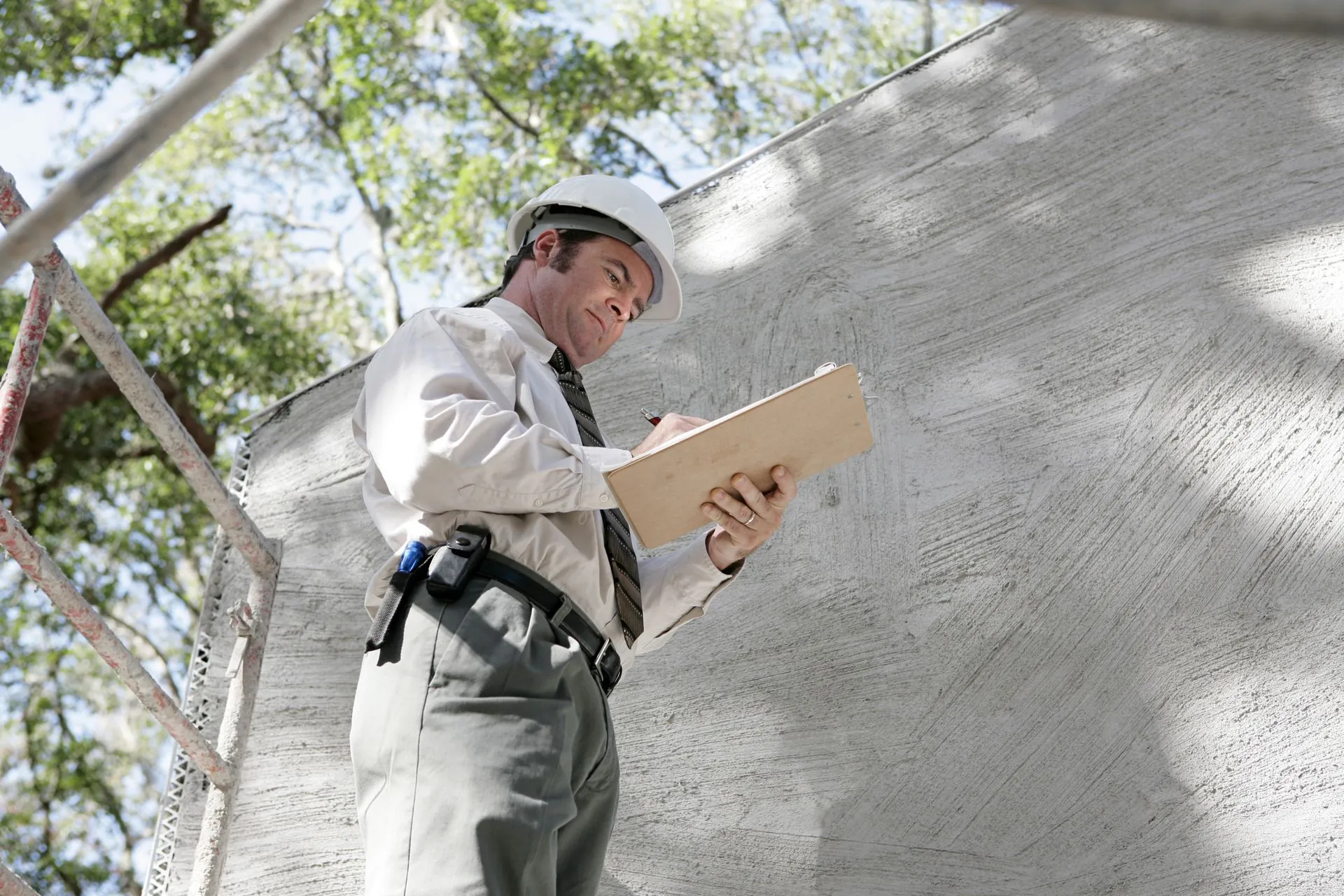
- Visual survey. The inspector looks for cracks, staining, missing sealant and flashing problems, especially under windows, at roof-wall intersections and at decks.
- Test locations are chosen. The inspector targets the spots most likely to leak.
- Small holes are drilled. Probes go through the stucco into the sheathing to read moisture levels. The holes are small and get sealed afterward.
- Readings are mapped. Each location is recorded with its moisture reading and often a photo.
- A written report is delivered. It shows where moisture is elevated and may recommend further investigation or remediation.
Some companies also use infrared cameras or non-invasive meters. Treat those as screening tools. Probe readings are what show conditions inside the wall.
What a stucco inspection costs
Published guides such as Redfin’s put non-invasive inspections at roughly $400 to $600 and invasive inspections at roughly $600 to $1,500 or more, depending on the size of the house and the number of test locations.
How to fit it into your purchase timeline
- Book early. Schedule the stucco inspection as soon as your offer is accepted so it lands inside your inspection contingency period.
- Get the seller’s written permission. Invasive testing drills into the seller’s home, so it needs their sign-off. Your agent can arrange this.
- Allow for weather. Testing can be delayed by rain or extreme cold. If your deadline is tight in winter, tell the inspector up front.
- Ask for the full report, not just a summary, including the readings for every test location.
What to do if the inspection finds moisture
Elevated moisture doesn’t automatically kill a deal, but it changes the conversation:
- Get a remediation estimate from a qualified contractor, based on the report.
- Negotiate. Buyers often ask for a price reduction, a seller credit or seller-paid remediation before closing.
- Understand the scope. Isolated high readings under a window are a very different job from widespread damage. Our guide to stucco remediation vs. stucco repair explains the difference.
- Ask about re-testing after any repairs the seller makes.
Frequently asked questions
Does a home inspection include stucco testing?
Usually not. A standard home inspection is visual. Invasive stucco moisture testing is a separate service, often done by a specialist.
Will stucco testing damage the house?
Testing leaves small holes that are sealed afterward. The patches may be slightly visible, which is why sellers have to approve the testing.
What moisture readings are a problem?
That depends on the meter and the material. Your inspector’s report should explain which readings are elevated and what they mean. Ask them to walk you through any high readings.
Can the seller refuse a stucco inspection?
Yes. Because the test is invasive, the seller can say no. Many buyers treat a refusal as a red flag and weigh it in their decision.
Who should do the inspection?
Many experts recommend an inspector who doesn’t also sell remediation services, so the findings are independent. Either way, insist on a written report.
Found moisture? Get a remediation plan
If your inspection report shows moisture, Stucco Repair Philadelphia can review it and explain what stucco remediation would involve. Call (215) 515-7702 or contact us.
Sources: Redfin, what is a stucco inspection; 6abc, Troubleshooters on stucco testing.